


Office Relocation vs. Office Decommissioning: What's the Difference and Why Both Matter
When businesses plan an office move, most of the attention is focused on the destination. New floor plans, employee workspaces, technology setup, and move-in schedules often take priority.
But there's another critical piece of the process that is frequently overlooked: what happens to the office you're leaving behind?
That's where office decommissioning comes in.
Understanding the difference between office relocation and office decommissioning can help organizations avoid costly delays, meet lease obligations, and ensure a smooth transition from one workspace to the next.
What Is Office Relocation?
Office relocation is the process of moving employees, furniture, equipment, and business operations from one location to another.
A typical office relocation project may include:
Moving office furniture
Relocating technology and equipment
Employee move coordination
Space planning and workstation setup
IT infrastructure installation
Move management and logistics
The primary goal of office relocation is to successfully transition your business into a new workspace with minimal disruption to operations.
What Is Office Decommissioning?
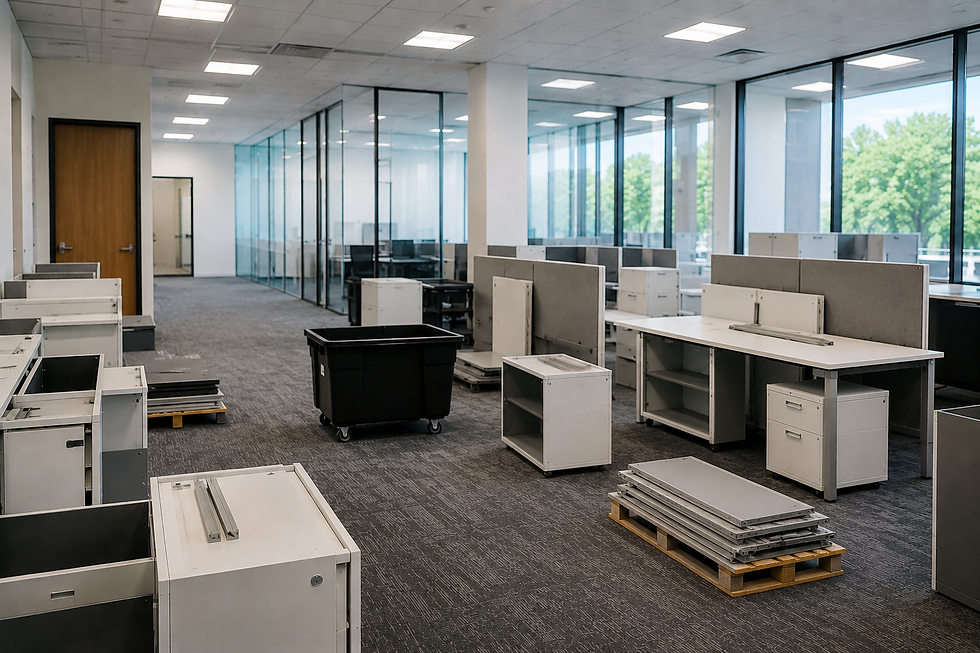
Office decommissioning focuses on the space you're leaving behind.
It involves preparing an office for vacancy by removing furniture, fixtures, equipment, and other workplace assets while ensuring the space meets lease turnover requirements.
Office decommissioning services often include:
Office furniture removal
Cubicle and workstation dismantling
Asset recovery and liquidation
Recycling and disposal coordination
Commercial office cleanout services
Project management and logistics
Lease-end office preparation
The goal is to return the office space in accordance with landlord expectations and move-out deadlines.
Why Businesses Often Confuse the Two
It's common for companies to view office relocation and office decommissioning as a single project.
While they are connected, they involve very different objectives.
Office Relocation Focuses On:
Getting into the new space
Maintaining business continuity
Employee transition
New office setup
Office Decommissioning Focuses On:
Vacating the old space
Removing furniture and assets
Meeting lease obligations
Preparing for turnover
A successful office transition requires both.
The Hidden Risks of Ignoring Office Decommissioning
Many organizations invest months planning their relocation but wait until the last minute to address the office they are vacating.
This can lead to:
Missed Move-Out Deadlines
Commercial leases often contain strict deadlines and requirements for returning a space.
Failure to meet these obligations can result in unexpected costs or penalties.
Increased Project Costs
Last-minute furniture removal and disposal often limit recovery opportunities and create scheduling challenges.
Operational Disruption
Without a clear decommissioning strategy, internal teams can become distracted by coordinating vendors, logistics, and property management requirements.
Multiple Vendor Management
Managing separate contractors for removal, recycling, logistics, and project coordination can create unnecessary complexity.
How Office Decommissioning Supports a Successful Relocation
A well-executed decommissioning project helps organizations:
Clear Offices Faster
Professional planning and coordinated removal services help businesses meet critical move-out deadlines.
Maximize Recovery Value
Identifying opportunities for asset recovery before deadlines become urgent can help offset project costs.
Reduce Internal Workload
A turnkey decommissioning partner handles logistics, scheduling, and project execution so internal teams can focus on the move itself.
Simplify Vendor Coordination
Instead of managing multiple service providers, businesses gain a single point of contact throughout the office exit process.
Signs You Need an Office Decommissioning Partner
Your organization may benefit from professional decommissioning services if:
Your lease is expiring
You're relocating to a new office
You're consolidating multiple locations
You're downsizing your footprint
You're closing a facility
You have large volumes of furniture or workstations to remove
You need to meet a strict move-out deadline
The earlier planning begins, the more options are available to streamline the process and maximize recovery opportunities.
Why Businesses Choose Office Liquidators
Office Liquidators helps businesses bridge the gap between relocation and vacancy.
As a turnkey office exit partner, we help organizations:
Clear offices fast
Maximize recovery value
Coordinate furniture removal
Manage office decommissioning logistics
Meet lease-end deadlines
Whether you're relocating, downsizing, consolidating, or closing a facility, our team can develop a customized strategy that helps simplify the office exit process.
Planning an Office Relocation?
Don't forget about the office you're leaving behind.
Contact Office Liquidators today to learn how our office decommissioning services can help your organization meet move-out deadlines, reduce complexity, and create a smoother transition from one workspace to the next.


Comments